Back
Back
 My Account
2026 Award Winner | University of Staffordshire MA Ceramics
Alice Watkinson | MA Ceramics - Recipient of the Potclays Graduate Award in 2026 as part of our Educlaytion programme.
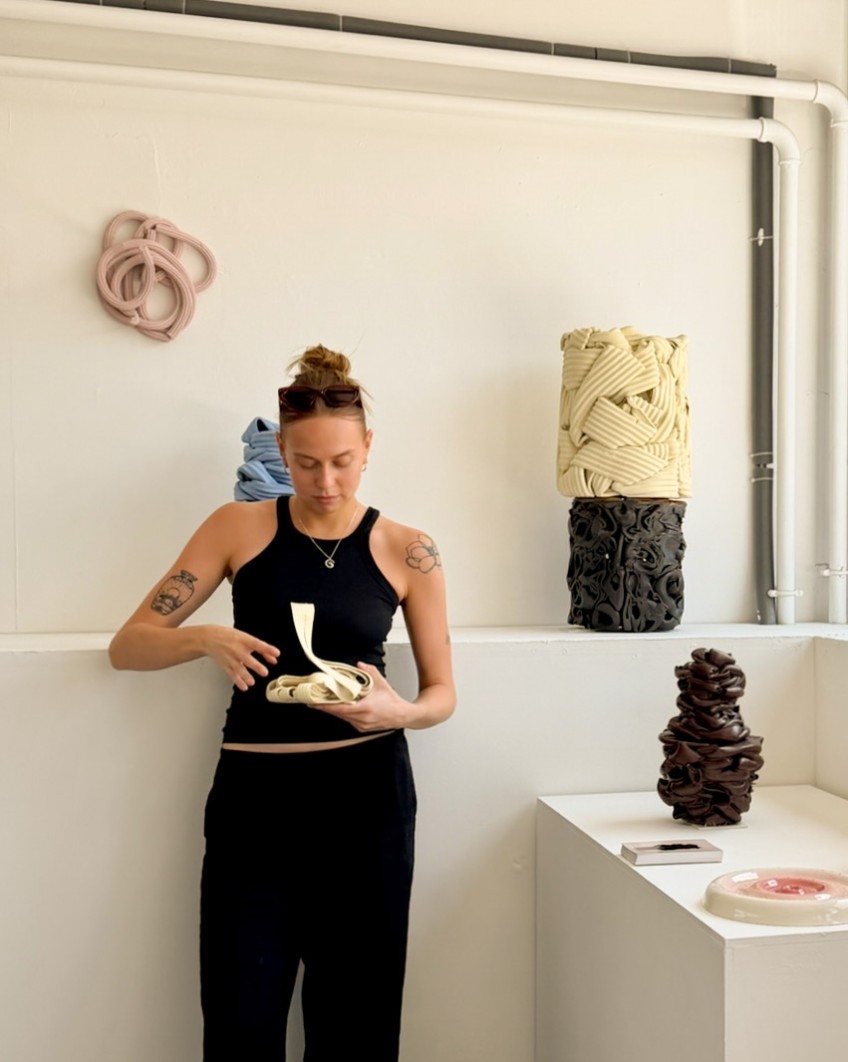
Alice Watkinson Staffordshire University | MA Ceramics
Recipient of the Potclays Graduate Award in 2026 as part of our Educlaytion programme
Tell us a bit about your journey into ceramics. What moments or decisions have shaped your practice most so far?
I’ve always been aware of the ceramic industry and history of the Potteries as I’m from Stoke and typical for most creative people, growing up, I always loved art and making all sorts of things. Naturally, I wanted to pursue this at university, so I studied Product Design at Sheffield Hallam and since, have worked in furniture and interior design which helped shape a lot of how I see form, colour and objects in relation to each other.
Last year, I made the spontaneous decision to leave my job in Nottingham and move back home to Stoke to pursue an MA in Ceramics. I was reaching a point where I felt I had so much more to give creatively. I feel privileged to be making and working with my hands full time. I also feel I’ve reached a point where I’m very sure of who I am. I’m confident in what I make because it’s reactive to my emotions. I don’t always consider what the outcome will be whilst I’m working, and I think this is what gives my work such a sense of movement and energy.
Do you remember your first meaningful experience with clay? What stayed with you from that moment?
I did a 6-week throwing class at Clay College years ago and knew I wanted to continue working with ceramics. At the time I was living and working in Sheffield. I met artist, Sarah Villeneau and spent evenings and weekends helping around the studio and practising my throwing and working in a studio.
What drew you to ceramics over other disciplines, and what keeps you committed to it?
I love the immediate results of throwing & extruding, although ceramics is so much more than working with clay. The whole entire process is LONG. Navigating firing temperatures, mixing glazes as well as handling fragile forms before they’ve been bisque fired, can be a humbling experience. I’m not a naturally patient person, and working in ceramics tests me. However, I get such a sense of achievement when I look at a finished piece, knowing how much time and energy has gone into it. Seeing my work progress as I find my style, keeps me motivated and committed. I’m constantly excited and I’m looking forward to seeing what direction I will go next.
What tends to spark new ideas in your work, and how do those influences show up in what you make?
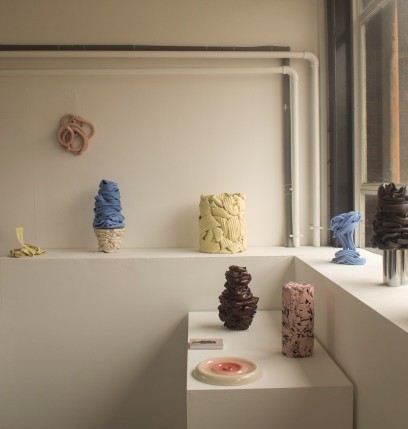
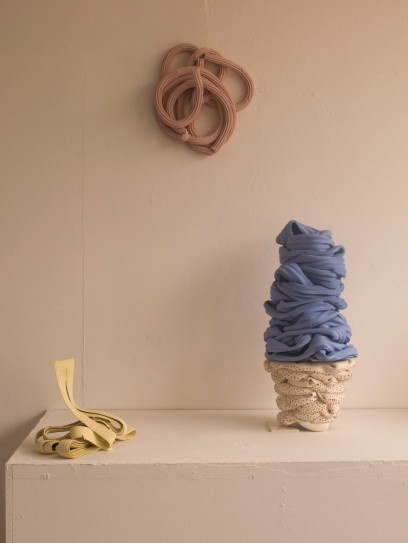
My workspace is a jungle of pieces, so sitting with what I’ve made and reflecting on what has and hasn’t worked is important. Stacking pieces together, considering what works together well, gives me inspiration for the next round of making and glazing.
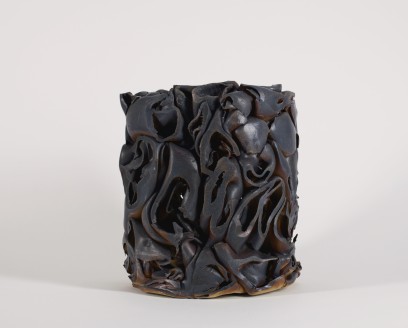
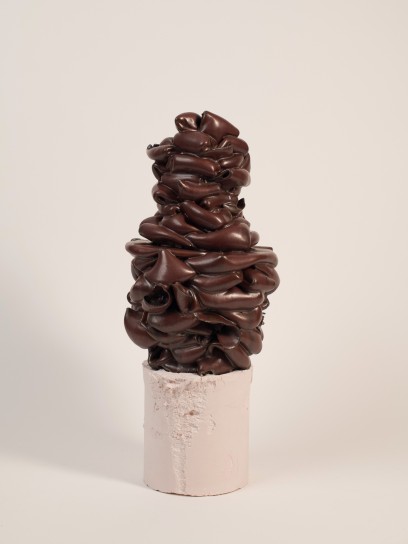
I have been inspired by methods of process art; the work of Lynda Benglis and Arlene Shechet has been influential to me through responding to the material intuitively and building compositions that consider materiality. My work is aesthetic driven; colour plays a key role as I’ve developed a complimentary palette of soft pastels and deeper tones. Taking influence from random day to day life, I look to relationships between objects, colour and textures; my camera roll is full of random moments that speak to me in a certain type of way.
Which tools, materials, or techniques have become essential to your way of working, and why?
I have become one with the extruder. I spend a lot of time cleaning it, which is the worst part. I designed and laser cut a selection of dies form mild steel, and I use these to achieve varying texture and scale with the extrusions I make. Other than that, and the obvious sorts of tools you can expect to find on a ceramicist, I don’t use much other than my hands.
What’s something in your process that rarely goes to plan?
I don’t tend to over plan with my work as I have rejected ‘design’ in some ways, I don’t want to conform myself into one idea too soon. In terms of form, I allow the process to lead; I influence the direction but if something ‘goes wrong’ I go with it. It doesn’t always work, but it’s all development.
I’ve had disasters with glazing as there’s lots of trial and error involved. I have recently started testing more reduction fired glazes and this is something I’d love to continue with.
Where do you allow yourself to take risks in your work?
I take risks with form; the best outcomes have happened from repeating processes over and over again, especially with extruding. I also tend to make decisions on the spot, trusting my intuition, I don’t over think when I start a new piece. I have the mindset I can always make it again.
What does a day in your studio actually look like, from start to finish?
I come in and go straight to the kiln to see what has been fired. I’ll look at what I’ve made, think about what has worked, or not. I then get straight into making. Especially given I’m so close to finishing my masters, I’m trying to make as much as I possibly can. As I have so many pieces on the go, I’m able to work on different stages of the making process each day. I’ll mix up a glaze, spray a piece and get it ready for firing. I’ll also test glazes when I find new recipes.
Each day is different. I may go over to metalwork to find elements to add to my pieces. Or if I have finished work, I’ll book out a photo studio.
What are you hoping to explore or push further in your practice over the next year?
I’m excited by my work, and I want to continue expanding form and scale through my current method of making. As I carry on building a quantity of work, I plan to create new compositions, stacking pieces and explore introducing other materials. I also want to introduce more thrown pieces within my work and explore combining making processes. I have already started development into lighting, and this is an area I want to explore further.
What do you wish someone had told you when you were studying ceramics?
Just keep making, don’t feel too precious about anything. The more things you try, the closer you’ll get to finding something you like.
I think it’s important to try technical projects as well as more ‘free’ sculptural outcomes. I’ve learnt so much about processes I’d never tried before such as plaster mould making and slip casting. Read a lot, look for inspiration in other artists’ work, go to exhibitions and constantly be open to learning from others.